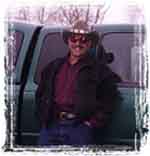
Mostly out of necessity (extreme dyslexia), Prof. Jack Horner has been a lifelong, bona fide rule breaker; a guy who doesn't know the meaning of thinking inside the box. Grab a cup of coffee and find ten minutes to watch this fascinating interview:
Paradigm shifting breakthroughs don't happen by following the rules...
Showing posts with label Jack Horner. Show all posts
Showing posts with label Jack Horner. Show all posts
Thursday, July 26, 2012


Sunday, November 20, 2011
"Reading is Overrated."
Famed Jurassic Park paleontologist Prof. Jack Horner discusses his dyslexia and how reliance on his imagination fueled his rise in the scientific community:
Tuesday, September 27, 2011
"We will make a Dino-Chicken. Absolutely..."

From the article:
"Hints of long-extinct creatures, echoes of evolution past, occasionally emerge in real life—they’re called atavisms, rare cases of individuals born with characteristic features of their evolutionary antecedents. Whales are sometimes born with appendages reminiscent of hind limbs. Human babies sometimes enter the world with fur, extra nipples, or, very rarely, a true tail. Horner’s plan, in essence, is to start off by creating experimental atavisms in the lab. Activate enough ancestral characteristics in a single chicken, he reasons, and you’ll end up with something close enough to the ancestor to be a “saurus.” At least, that’s what he pitched at this year’s TED conference, the annual technology, entertainment, and design gathering held in Long Beach, California. “When I was growing up in Montana, I had two dreams,” he told the crowd. “I wanted to be a paleontologist, a dinosaur paleontologist—and I wanted to have a pet dinosaur.”"
Read the entire article here: How to Hatch a Dinosaur. Hmmm... perhaps someone should write a book...
Tuesday, June 07, 2011
Paleontologist Jack Horner on Building a Dinosaur from a Chicken...
Recorded at TED (Technology Entertainment and Design, March 2011), famed paleontologist Jack Horner touches on subjects ranging from Michael Crichton's Jurassic Park, to recovering soft tissue from fossilized dinosaur bones, to his own efforts to retro-engineer a dinosaur from a chicken embryo. "If you want dinosaur DNA, go to the dinosaur." Fascinating stuff...
For my take on the subject, be sure to check out Little Birdies! As always, you can read the opening chapters here.
For my take on the subject, be sure to check out Little Birdies! As always, you can read the opening chapters here.
Sunday, September 19, 2010
"Birds are technically dinosaurs."
In a far-ranging, almost hour long discussion, famed paleontologist Jack Horner talks about all things dinosaurs. The dino-chicken discussion start around 15:00. About a half-hour in, he talks about what a very tiny window on the past we actually have, that fossilization is extremely rare, and how it is limited by location and continental geologic activity spanning millions of years. The Jurassic Park/Michael Crichton discussion starts at about 48:00. If you're interested in dinosaurs/paleontology, put on a pot of coffee; this one is well worth your time.
"Dinosaurs were the dominant land animal for 140 million years, and those are the extinct ones; they're still a dominant animal as birds. So how and why a few big, clunky ones went extinct is, to me, not interesting at all." Fascinating stuff...
And if that's not enough for you, please be sure to check out Little Birdies! "...you'll never look at birds the same again! "
"Dinosaurs were the dominant land animal for 140 million years, and those are the extinct ones; they're still a dominant animal as birds. So how and why a few big, clunky ones went extinct is, to me, not interesting at all." Fascinating stuff...
And if that's not enough for you, please be sure to check out Little Birdies! "...you'll never look at birds the same again! "
Wednesday, September 15, 2010
Paleontologist Jack Horner on resurrecting extinct life-forms...

Right now if you asked the National Science Foundation how much they thought they were going to be funding in paleontology over the next 30 years, they’d probably say zero, because they’re not very much into historical science. Historical science is being left in the dust. But paleontology isn’t a purely historical science, or at least it won’t be for much longer, because soon we may have the capability of resurrecting extinct life-forms. If we want to see an animal like a velociraptor [a small carnivorous dinosaur], we will be able to create one by genetic engineering. It won’t be a genuine one from the past, but it could be a reasonable simulation. It might even be possible to make something that looks like a T. rex, once we understand what all the genes do and how to turn them on and how to turn them off.
Read the entire interview here: Dinosaurs Might Soon Walk out of the Museum and Into the Lab. Of course, I've got my own reasons for cheering on the development of test-tube dinosaurs...
Tuesday, April 13, 2010
Professor Jack Horner - Bringing Dinosaurs Back From Extinction
Famed "Jurassic Park" Paleontologist Jack Horner is the guest on These Days, a talk-show on KPBS radio in San Diego. He talks about his book, How to Build a Dinosaur, and covers the complexity and benefits of the ongoing research into doing just that. It runs about 22 minutes: Bringing Dinosaurs Back From Extinction
The story of my own dinobirds can be found in Little Birdies!, available in both softcover and as a Kindle e-book.
Monday, November 16, 2009
60 Minutes "B-Rex" segment with paleontologist Jack Horner...
Here's the entire 60 Minutes/Jack Horner segment from this past Sunday. It runs almost 14 minutes, but If you like birds, dinosaurs or dino-birds, it's well worth your time...
Lesley Stahl meets the inspiration for the lead character in the classic film Jurassic Park and reports on how famed dinosaur hunter Jack Horner is shaking up the paleontology world.
Friday, November 13, 2009
More on the CBS/Jack Horner segment: Real-Life Jurassic Park...
Lesley Stahl was on the CBS Early Show pitching her 60 Minutes segment. They're going to be covering the T-Rex soft-tissue controversy, and it looks like she's giving a lot of time to Prof. Horner's dinosaur retro-engineering/dino-chicken idea...
Must-see TV...
You know, you could always read about dino-birds here: Little Birdies!
Must-see TV...
You know, you could always read about dino-birds here: Little Birdies!
Paleontologist Jack Horner on 60 Minutes this Sunday...
Famed "Jurassic Park" paleontologist Jack Horner will be interviewed by Lesley Stahl this Sunday (Nov. 15, 2009).
Watch CBS News Videos Online
Should be good...
Read the entire article here: Scientist's Dino Findings Making Waves
"(CBS) If you saw "Jurassic Park," you've already met Jack Horner - sort of. That's because he was the inspiration for the film's main character, paleontologist Alan Grant, and he worked as a consultant on all three films.
To find out what Horner is like in real life, 60 Minutes correspondent Lesley Stahl met him at a dig site in the badlands of Montana and reports on how the famed dinosaur hunter is shaking up the paleontology world like a rampaging T. Rex - claiming to have found organic material from dinosaurs that has survived for tens of millions of years.
Her story will be broadcast this Sunday, Nov. 15, at 7 p.m. ET/PT."
Watch CBS News Videos Online
Should be good...
Read the entire article here: Scientist's Dino Findings Making Waves
Saturday, October 31, 2009
And the three become one...
Here's a great clip explaining the thinking behind the consolidation of three dinosaur species into one. UCMP Curator Mark Goodwin and Museum of the Rockies Curator Jack Horner argue that there were fewer dinosaur species than previously thought.
I know I'm making you sit through science class here (and on a Saturday morning no less...) but this is cutting edge stuff, a real re-thinking about how paleontologists will look at fossils from now on. This isn't settled science yet, but I suspect that this perspective is out there to stay.
If you'd rather read than watch, the same material is covered in a Science Daily article here: New Analyses Of Dinosaur Growth May Wipe Out One-third Of Species.
I know I'm making you sit through science class here (and on a Saturday morning no less...) but this is cutting edge stuff, a real re-thinking about how paleontologists will look at fossils from now on. This isn't settled science yet, but I suspect that this perspective is out there to stay.
If you'd rather read than watch, the same material is covered in a Science Daily article here: New Analyses Of Dinosaur Growth May Wipe Out One-third Of Species.
Saturday, October 17, 2009
Jack Horner talks dinos, digging, and chickenosaurus...

Paleontologist Jack Horner discusses a wide range of topics in this article:
What is the appeal of dinosaurs?
According to Dr. Jack Horner, The Museum of the Rockies curator, “They are big, old and dead.”
The Museum, in Bozeman, is home to a world famous collection of dinosaur fossils and paleontology program. Dinosaur fossils are found in Montana rocks from the Jurassic and Cretaceous periods. Dinosaur dig crews led by Horner, science advisor to the Jurassic Park films, excavate fossils which are prepared and studied at the Museum in Bozeman. Some of the most famous dinosaurs in the world such as Tyrannosaurus rex, Triceratops, and Deinonychus (very similar to Velociraptor) can be seen on display at The Museum.
Horner, a Montana native, has given lectures around the world, but talking to the general public people about dinosaurs- such as he will be doing on November 3rd at the Gourmet Gas Station- or to graduate students, who work for him for nothing more than a peanut butter and jelly sandwich a day, is one of his favorite parts of the job.Read the entire article here: From dinosaurs to World War II photographs - The Museum of the Rockies has it all
Saturday, October 10, 2009
Up to one-third of all dinosaur species may be misidentified...
According to paleontologist Jack Horner and associates, up to one third of all presently recognized dinosaur species may, in fact, simply be misidentified youngsters.
Regardless of what some political types might try to tell you about there being "no more debate" when it comes to certain areas of scientific inquiry, in science, the jury is always out...
Read the entire article here: A Third of Dinosaur Species Never Existed?
T. rex and Triceratops are among the best-studied dinosaurs of all time. How much more can we learn? Surprisingly, more than we ever thought. Famed paleontologist Jack Horner and his colleagues are challenging the long held belief that young dinosaurs looked like miniature versions of their parents. Instead they may have looked so different that scientists assumed juveniles and adults were separate species. Even a young T. rex it would be hard to recognize. The transformations from childhood to adulthood were so dramatic that Horner suspects that up to a third of all dinosaur species may vanish in cases of mistaken identity. In their place were developing a new understanding of the complexity of dinosaur lives and learning new reasons for some of the dinosaurs' strangest features like horns lumps, bumps, and dome-heads.
Clues to why dinosaurs underwent such dramatic physical changes may be found in their closest living relatives—birds experts say. Hornbills, for example, don't sport their distinctive helmet-like head casque (see hornbill picture) until they are about three-quarters grown. Like deer antlers, the casque helps other animals discern between mature adults and juveniles.
In the same way, dinosaurs' changing appearances might have also promoted visual communication.For example head knobs or horns, likely paired with color variations, may have created unmistakable visual displays that made sure members of a species recognized one another.They may also have identified dinosaurs as male or female and marked them as mate-seeking breeders or juveniles in need of protection.
Regardless of what some political types might try to tell you about there being "no more debate" when it comes to certain areas of scientific inquiry, in science, the jury is always out...
Read the entire article here: A Third of Dinosaur Species Never Existed?
Thursday, September 24, 2009
Jack Horner on retro-engineering a dinosaur...
In this short Discovery Channel clip, paleontologist Jack Horner explains, in very easy-to-understand terms, how it may be possible to retro-engineer and hatch a living dinosaur. This is fascinating stuff...
Wednesday, September 23, 2009
Two Reviews of Jack Horner's Dino-Chicken book...
Here's a couple of nice reviews of Paleontologist Jack Horner's book: How to Build a Dinosaur. From the book:
What I like about the idea of using a chicken that developed into a dinosaur as evidence of the reality of evolution is that it is more than an idea. It is an experimental result. And it calls out for questions. What is it? How did you do it? Is it a circus freak or a trick? What does it mean? Without staking out a position or starting a war of words, the animal would prompt a discussion that would have to end up with the mechanisms of evolution and its footprint in the genes of living animals. Even more than a fossil, it would cry out for explanation. ... That would be the most satisfying lecture I could possible give. I don’t like providing answers. I never have. I like questions. I like asking them, trying to figure out answers, trying to figure out what we are really asking, and what new questions come up. For this event I won’t have to prepare any speech at all. My entire prepared text will consist of one simple question, from which everything else will follow. I’ll walk to the edge of the stage, point to the creature on the leash, look at the audience, and say, “Can anyone here tell me what this is? ”Phillip McIntosh's review is here: How to Build a Dinosaur by Jack Horner: Extinction Doesn't Have to be Forever.
The review from John's Blog is here: How to Build a Dinosaur, by Jack Horner.
Sunday, September 06, 2009
Birds with wings claws are still out there...
In my latest book, Little Birdies!, I postulated the re-emergence of wing claws in parrots after a series of experimental mishaps. It turns out that this idea was less of a fictional leap that I had presumed:
Here's a quick look at the critter...
Perhaps Professors Hans Larsson and Jack Horner should be studying the DNA from the hoatzin rather than that of the chicken; it looks like Mother Nature has done some of their work for them. Though, in fairness, I'm guessing that chicken eggs are generally more available for study then those of the South American, swamp-dwelling hoatzin.
Read Adrian Warren's entire, very interesting article here: RELIC OF PREHISTORY?
Update (July 27, 2011) - Here's another nice look at the modern dinobirds:
More here: Chick uses Wing-Claws to rescue itself from drowning...
"One of the strangest living birds is the hoatzin, which seems to be a link with birds that became extinct millions of years ago, and even shows similarities to the first known bird Archaeopteryx... About the size of a rather slender, upright pheasant, the hoatzin has an untidy crest of feathers, blood-red eyes encircled by bright blue skin, a long neck and long tail feathers. But perhaps the most interesting characteristic is the presence of claws on the wings and these, although useless to the heavy adult bird, are employed by the youngster to clamber among the branches near the nest- just as Archaeopteryx must have done so many millions of years ago.
The main function of the wing claws, it seems, is to assist the young hoatzin in times of crisis. The nest is normally built on branches overhanging water and is thus exposed to the eyes of marauding hawks. It is a rudely constructed platform of short twigs of roughly pencil thickness. If danger threatens, the parents usually abandon the nest for the safety of dense bushes nearby. The chick, left to its own devices, either uses the wing claws to help it clamber through the branches to some inaccessible spot, or dives into the water and emerges farther downstream to clamber back to 'the nest once the danger has passed."
Here's a quick look at the critter...
Perhaps Professors Hans Larsson and Jack Horner should be studying the DNA from the hoatzin rather than that of the chicken; it looks like Mother Nature has done some of their work for them. Though, in fairness, I'm guessing that chicken eggs are generally more available for study then those of the South American, swamp-dwelling hoatzin.
Read Adrian Warren's entire, very interesting article here: RELIC OF PREHISTORY?
Update (July 27, 2011) - Here's another nice look at the modern dinobirds:
More here: Chick uses Wing-Claws to rescue itself from drowning...
Tuesday, August 25, 2009
More on the dino-chickens...
So if they can eventually do it deliberately, through genetic manipulation, who's to say that it can't happen accidentally? Read Little Birdies! to see how things might work out in that regard...
Read the entire article here: Live dinosaurs on the way, Montreal researcher says.A paleontologist in Montreal plans to manipulate chicken embryos to give them dinosaur features, a first step towards hatching live prehistoric animals.
Hans Larsson told CTV's Canada AM the first chicken embryo with a range of dinosaur traits could be made within five years. However, that depends on the project receiving adequate funding, said Larsson, a 38-year-old professor at McGill University.
By flipping certain genetic levers at the appropriate point in a chicken embryo's development, Larsson believes he can instill features that disappeared from birds millions of years ago. ...
The idea for the project came about over a discussion with internationally renowned American paleontologist Jack Horner. Among other things, Horner served as technical adviser for the Jurassic Park films.
Friday, August 21, 2009
The dino-birds are coming...
This is the best article yet on the quest to bring dinosaurs, woolly mammoths, moas, mastodons, perhaps even a Neanderthal, back to life using the principles of evolutionary developmental biology (evo devo).
It turns out that some of my scientific suppositions in Little Birdies! track nicely with Professor Horner's concept that the dinosaurs are still among us, just napping comfortably somewhere in the depths of modern-day avian DNA.
Read the entire article here: The quest to build a dinosaur.
It’s one of the basic principles of evo devo: as an embryo morphs from just a few cells into a fully formed creature, it shows echoes of ancestral traits, bumping up against evolution along the way. Chicken embryos, for one, start off looking fairly generic, much like the fishy ancestor they share with humans and other vertebrate creatures (it was in the fish that nature first learned how to lay down a backbone, Carroll says). As the embryo continues to transform, there’s a brief window when, according to Larsson, it takes on “dinosaurian traits.” For a mere 10 hours, the chicken embryo sprouts five fingers with pointed and clawlike tips, a hint of teeth, and a tail (up to 22 vertebrae, roughly 15 more than in a developed chicken). Suddenly, a genetic switch flips: the teeth disappear, the tail is destroyed, and the five fingers become three. It looks much more like a bird.
Why would an embryo build extra fingers, teeth or a tail, only to have them disintegrate? Evolutionary change is “like tuning a car while the engine’s running,” Carroll says. “You can’t just junk one part and put something else in; in the meantime, it wouldn’t work. Those pre-existing programs are often the foundation for something new.” For Larsson, the trick will be to override them. ...
If his efforts succeed, what will Hans Larsson have created? “Within five years, I think we could get a chicken with a tail, forearms, and teeth, and transform its feathers back to their ancestral shape, which is probably a hollow quill,” he says. It would be slightly larger than a standard chicken, although using another bird species (say, an emu) or treating it with growth hormones could produce different results. It would still have a chicken genome, and so wouldn’t technically be a T. rex or a velociraptor; but it wouldn’t be a chicken, either, at least not as we’d recognize it. So what, exactly, would it be?
“It would be a dinosaur,” Larsson says, “because chickens are dinosaurs.”
It turns out that some of my scientific suppositions in Little Birdies! track nicely with Professor Horner's concept that the dinosaurs are still among us, just napping comfortably somewhere in the depths of modern-day avian DNA.
Read the entire article here: The quest to build a dinosaur.
Monday, August 17, 2009
Your parrot isn't related to dinosaurs, your parrot might BE a dinosaur...
I love this stuff:
Read the entire article here: 'Dinochicken' Scheme Puts Evolution in Reverse
Here's paleontologist Jack Horner on the scientific underpinnings of the Dinosaur Retro-Engineering Project: Dinos: The Futurist: Retro-Engineering Dinos. Fun Stuff.
Some of the world's leading paleontologists are attempting to recreate a dinosaur -- or something a lot like a dinosaur -- by starting with a chicken embryo and working backward to engineer a "chickenosaurus" or "dinochicken," project leader Jack Horner told Discovery News.
Such "reverse evolution" has been successfully performed in mice and flies, but those studies focused on re-introducing just a few bygone traits. The dinochicken project instead has the goal of bringing back multiple dinosaur characteristics, such as a tail, teeth and forearms, by changing the levels of regulatory proteins that have evolved to suppress these characteristics in birds.
"Birds are dinosaurs, so technically we're making a dinosaur out of a dinosaur," said Horner, a professor of paleontology at Montana State University and curator of paleontology at the Museum of the Rockies.
"The only reason we're using chickens, instead of some other bird, is that the chicken genome has been mapped, and chickens have already been exhaustively studied," added Horner.
He and colleague James Gorman, deputy science editor of The New York Times, have just co-authored a new book, "How to Build a Dinosaur: Extinction Doesn't Have to Be Forever," which describes the project in detail.
Although the plan seems more like a page out of the fictional "Jurassic Park," Horner assured it is real and is already underway.
"A number of people in a number of different places are moving forward with the project slowly and carefully," he said.
Read the entire article here: 'Dinochicken' Scheme Puts Evolution in Reverse
Here's paleontologist Jack Horner on the scientific underpinnings of the Dinosaur Retro-Engineering Project: Dinos: The Futurist: Retro-Engineering Dinos. Fun Stuff.
Friday, July 03, 2009
How to build a dinosaur...
Here's a nice, concise take on how Jack Horner proposes we can build a dinosaur:
Read the whole article here: MARTHA ALLEN: How to build a dinosaur.
This is quite similar to what happens in Little Birdies!, except ... well, I really don't want to give too much away. The book should be available within a week or so...
Horner worked with the makers of “Jurassic Park,” one of my all-time favorite movie series. As you may recall, the plot of these movies revolved around the re-creation of dinosaurs by scientists who had manipulated DNA taken from blood removed from the tiny guts of mosquitoes who had bitten dinos, only to be encased in resin that over time hardened into amber.
The so-called building of a dinosaur proposed in Horner and Gorman’s book would be done differently, however. Horner has long claimed that birds are not only descended from dinosaurs, but are in fact dinosaurs themselves, and so possess the same genes as their nonavian dinosaur ancestors. (I love the term, used frequently in the book, “nonavian dinosaur.”) It’s simply a matter of triggering the switches that control whether teeth, a lengthy vertebrate tail and those funny little arms instead of wings will manifest themselves as the embryo develops.
Read the whole article here: MARTHA ALLEN: How to build a dinosaur.
This is quite similar to what happens in Little Birdies!, except ... well, I really don't want to give too much away. The book should be available within a week or so...
Subscribe to:
Posts (Atom)